Introduction
Life can get very manic, especially during the middle of a pandemic. I have the blessing of being able to visit home, which is a 40-acre ranch in Wheatland named G2 Farm and Ranch. The ranch is small-scale but functional, and my mom and dad work hard to keep it running. So, allow me to show you the morning routine of chores for the ranch.
Photo Essay
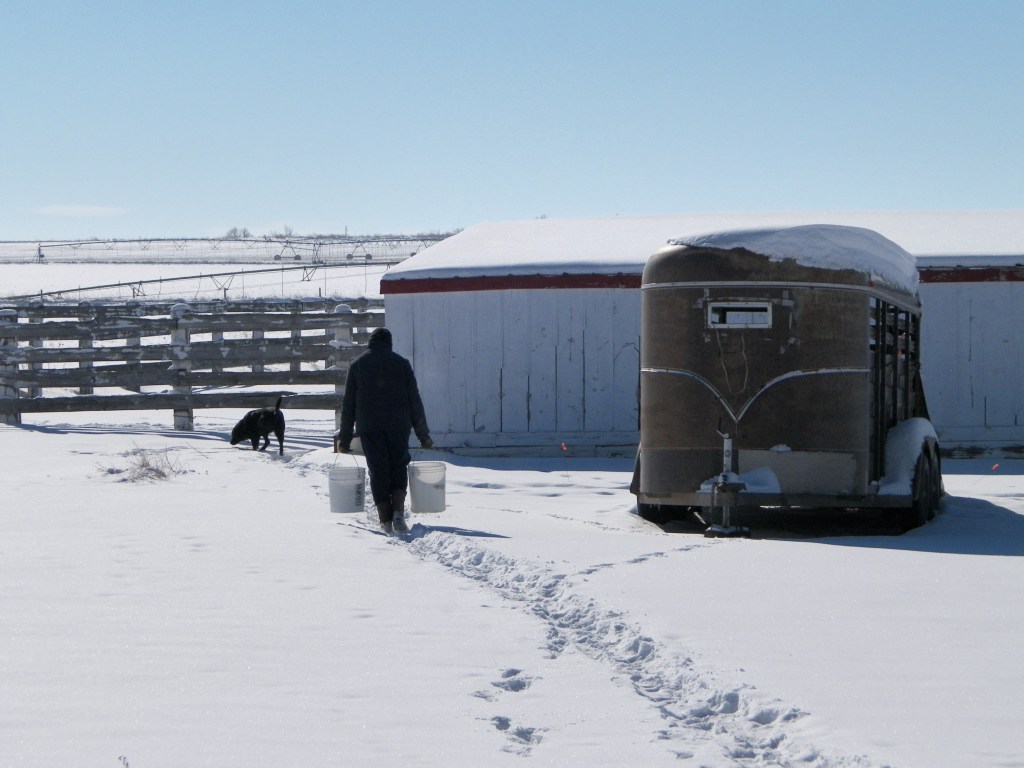
Mary Meyer, age 55, and Zenya the black Lab walks toward what was previously a horse corral to begin morning chores on the G2 Farm and Ranch on Monday, February 15. The ranch is home to Galloway cattle, pigs, and chicken as livestock in addition to about six or seven cats as general pets. Fruits and vegetables can also be grown during the correct seasons.
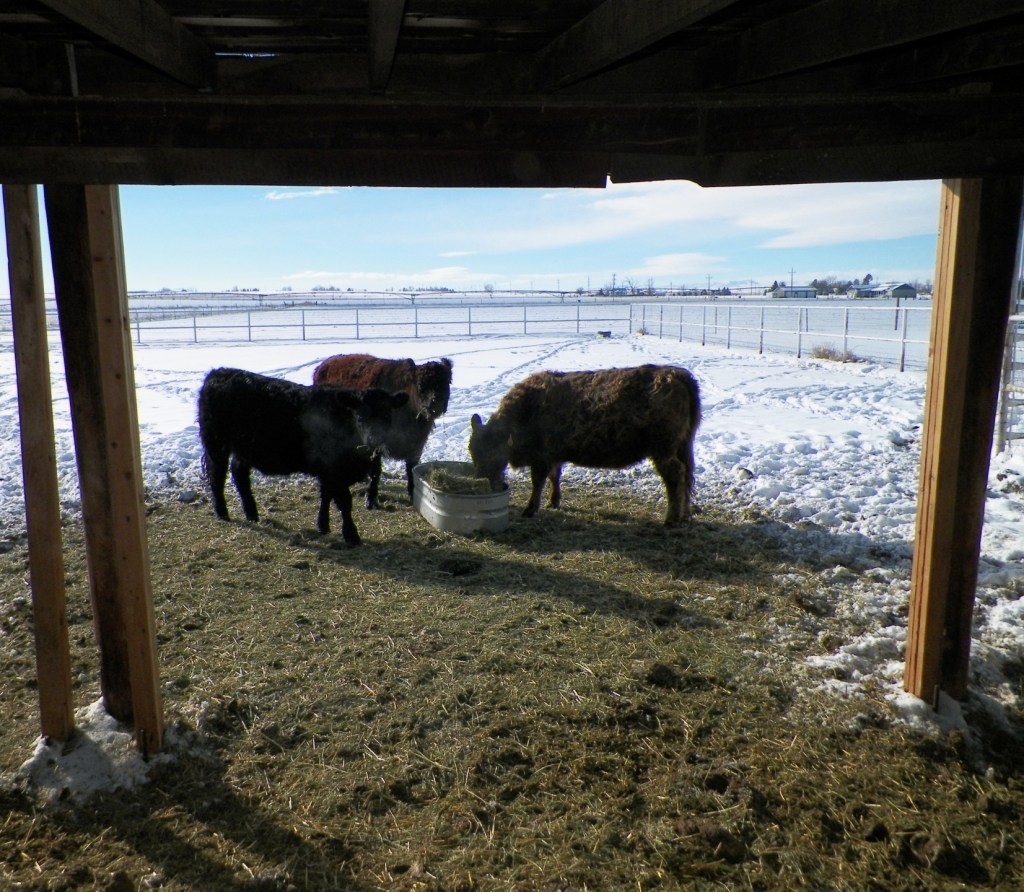
The three Galloway cattle of G2 Farm and Ranch enjoy their breakfast of oat, alfalfa, and grass hay during the morning of Tuesday, February 16. From left to right, they are Harvey Girl, Chessy, and Shasta. In addition to the hay, the cattle are also given a sweet mix and range cubes by my father later in the day as treats.
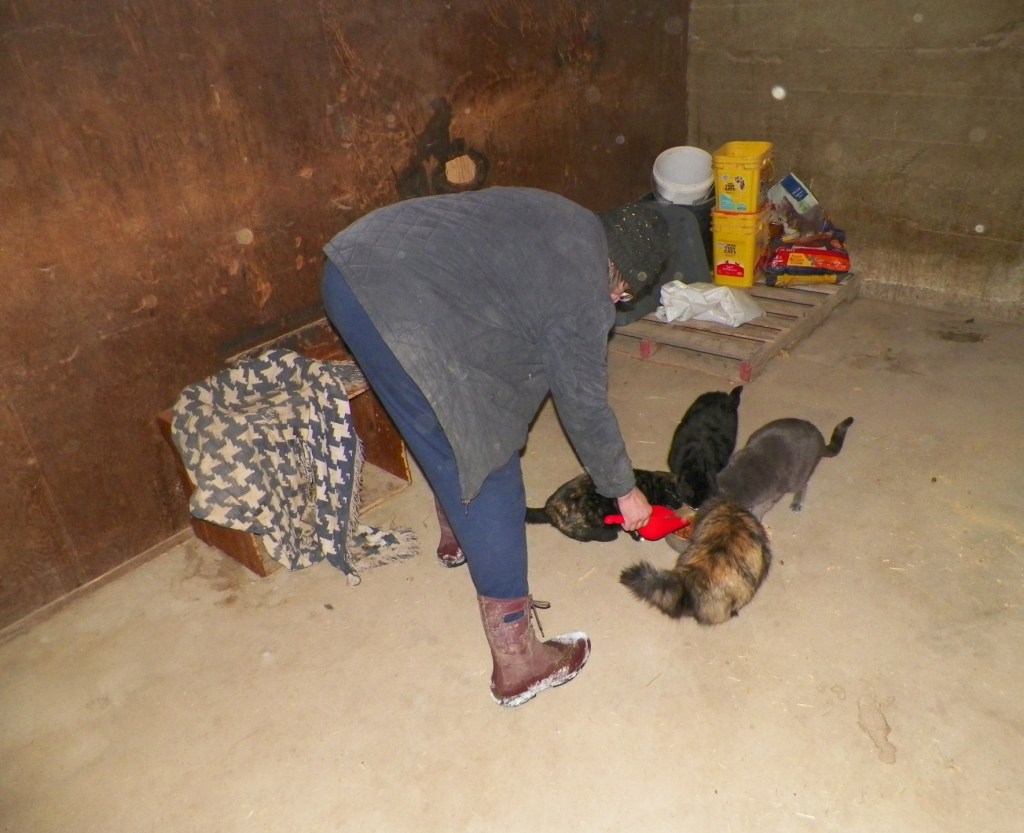
Mary Meyer sprinkles cat food into a bowl for four of the five cats located in the barn of G2 Farm and Ranch in the morning of Tuesday, February 16. Clockwise from top right, the cats are Shadow, Veronica, Callie, and Cosmo. During the day, the cats are allowed outside to wander the grounds of the homestead and can reenter the barn during evening chores if they want to.
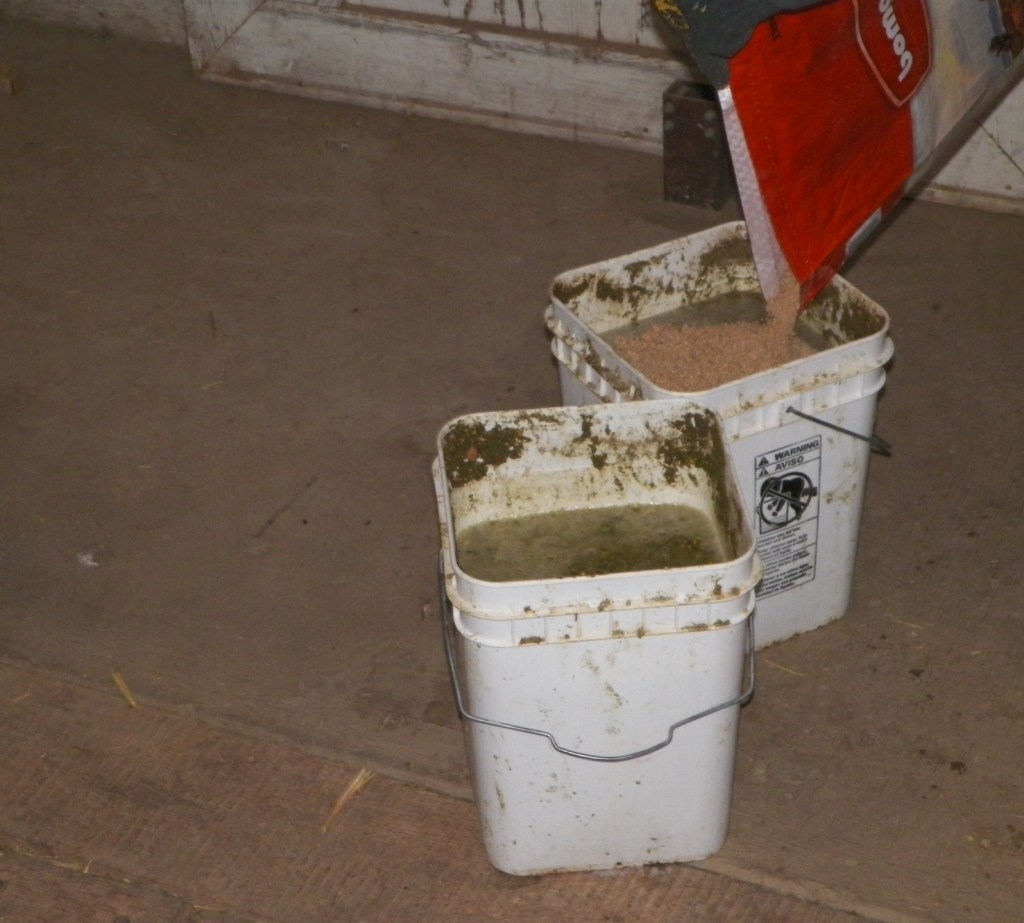
Wet chicken food is prepared for the Tuesday, February 16 morning feeding. This wet feed is made when it is warm enough so that it does not freeze and used because it helps the chickens lay better quality eggs. It is a combination of alfalfa pellets, scratch grains, range cube pellets, pheasant food, kelp, flax seed, and cream or apple cider vinegar when possible.
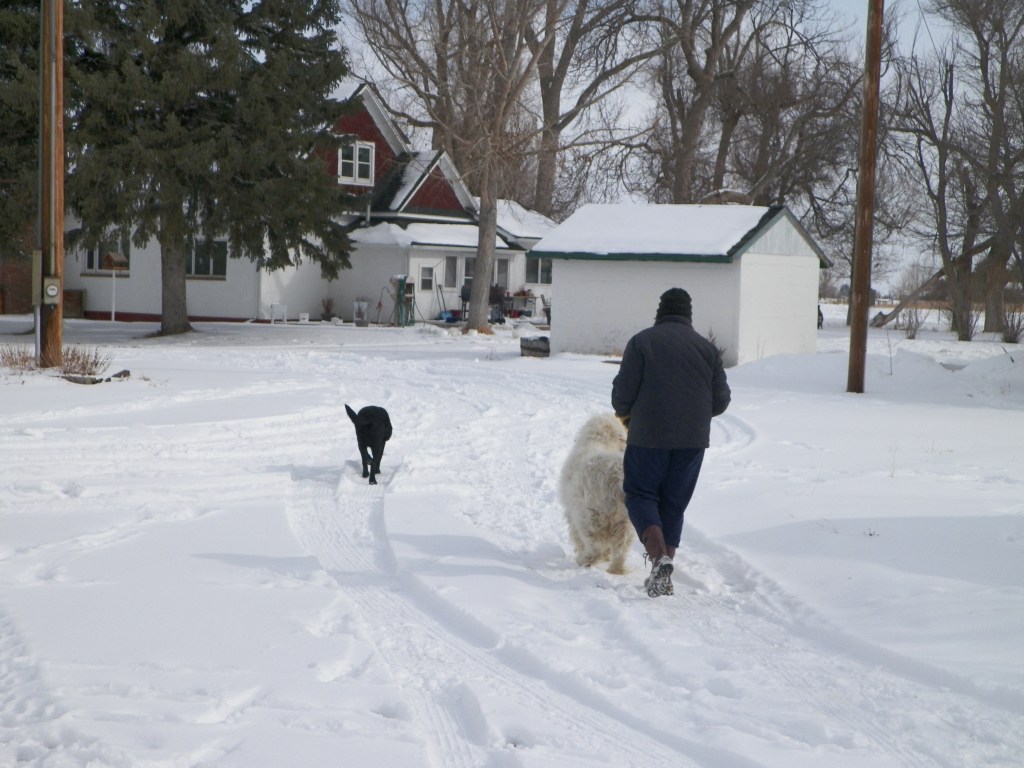
As the last part of morning chores, Mary Meyer, accompanied by Zenya (left), walks Grace the Great Pyrenees (right) out of the barn and towards a kennel on the opposite side of the main house after morning chores are complete on Wednesday, February 17. During the colder months, Grace stays inside the barn. But when the weather is nice enough, however, she can come outdoors.
Closing and Reflection
After some reflection, the most difficult portion of making the photo essay was in capturing the shots I wanted or needed. Because of the close quarters of some of the stalls and sheds where I was photographing, it was hard to get good angles on some of the chores being done. I’m not sure if I myself should have tried better positioning while taking photos, or if I should have adjusted the settings to better fit the environment. Regardless, working in some of the small spaces was definitely the hardest part of the essay.
I wish that I could done some things differently when capturing these photos. Specifically, I wish I could have gotten some more close-up and detail shots. The reason why I wish this happened is because it would have been good practice and experience for me as a photographer. It would have also given me a bigger gallery to draw from when choosing photos for this essay. I believe it is always better to have more photos.
Something that I learned about photojournalism by doing this essay is that photojournalism feels like 70% planning, 20% skill, and 10% luck. Planning is the biggest percentile because I believe that it is the biggest component in engaging in photojournalism. You plan must who, what, when, where, why, and how of any photo essay if you want to maximize your chances of being successful.
Next important aspect is skill because you need to be able to know how to handle a camera to get the best shots possible. Even with a cell phone camera, knowing what functions or settings make the best kinds of shots is beneficial. And lastly, you sometimes have that perfect shot fall into place that ends up making the essay extra special or unique.
 James Meyer