Enter the card engine
When I left off the previous post about the CGC, not much had happened. I arrived at the Red Lion Hotel and Convention Center, surveyed the floor plan, and ran into some friends. For this post, I will continue the events of Friday, April 22. It was time for me to jump into the world of card games.
After getting my first victory in Oathen and chit-chatting with Eric, I wandered into the board game ballroom and sat down at the closest table to me. There were at least two people at this table. It is possible there was a third, but I don’t remember. One of the had long black hair, black long sleeve shirt, and grey pants. The other one was bald, had a red jacket or coat, and jeans. Greetings were exchanged and I sat down, ready and willing to try out this creation.
I would later come know these individuals as Lewis and Mark respectively. Lewis asked me if I willing to try a puzzle game, to which my response was yes. He handed me a packet of nine customized Creation Cards and laid out a mat five playing cards in length and five in width. For clarity, these cards are about the same size as standard playing cards.
Each puzzle card had either a number or a colored symbol in each corner. When laid out on this mat, the cards’ corners would touch. The goal was simple: create a line or path of matching symbols and numbers using all nine cards. Numbers matched to numbers, and symbols had to match in both color and and shape.
Perhaps it is myself projecting onto the audience, but I would hazard a guess that someone reading that is thinking, “How hard can it be? It’s just a mashup of matching and connect the dots.” Yeah, it sounds easy enough. Theory and practice are two very different things. I think my go around with this little game took 30 minutes! The dopamine rush after finally solving it felt great. Lewis told me that the easier puzzles had more possible solutions, while the harder ones had less.
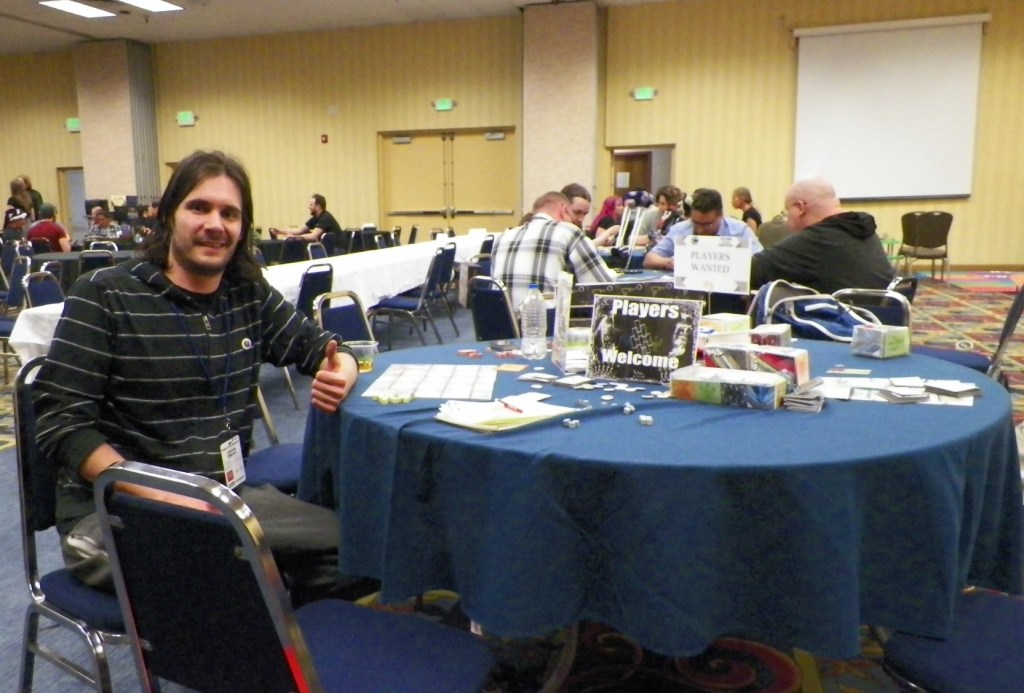
After completing my single player puzzle, another convention guest joined the table. With him, myself, and Lewis all playing, we changed games. This one would be head to head to head. All three of us were given a hand of either seven or nine Creation Cards. A single card was drawn from a deck to act as a starting card. On command, players would begin trying to match one of their cards to the card that was currently on top as fast as possible. For example, if the starting card had a red circle on it and one of my cards also had a red circle, then I could play my card on top of the starting card.
Two rules oversaw the game: you could not jump in on yourself i.e. playing two of your own cards back to back, and you had to declare what you were matching with. You could match the same number or symbol as many times as you wanted as long as somebody else played a card between you playing yours. The objective was to get rid of your hand first. There is not a turn order. If you can make a match, you make it immediately. It was fast and furious.
Joined by a second convention guest, the last type of game I played with Lewis’s engine was another free for all, but this time it was with words. Along with numbers and symbols, the Creation Cards have letters on them. Each player was given nine cards. Five were to be used as a hand, while the other four were a draw deck. Using the same mat from the single player game, players placed down cards and used the letters on them to form words.
The number of letters from each word equaled the amount of score you earned for making the word. Once you made your word, you would draw from your deck and replenish your hand back to five cards total. Players are also allowed to build off of and rearrange each others words. As an example, if I made the word “Tar” on my turn, then I would earn three points. The next person could then make the word “Tiara” and receive five points.
I think this game lasted at least an hour. I came away with the runner-up spot at 31 points. Lewis beat me by two. It was all good sportsmanship. After the convention guests had departed, I explained myself to Lewis and asked for a photo op and an interview. Mark asked not to be photographed, which I respected. While it is part of my job as a reporter to request interviews, there is often an element which makes the interview feel like an invasion of privacy.
Murder in the Red Lion
It was high moon when it came time to play “Werewolf.” Based on my own knowledge, Werewolf has alternative titles like “Town of Salem” or Mafia.” If someone is familiar with video games, you may remember that a title called “Among Us,” gaining popularity when COVID initially happened. Werewolf is the analog version done with cards!
If you have not heard of this game, here is how it works. A storyteller or narrator distributes cards among the players. Depending on what kind of card they receive, a player is assigned a role. There are two minimum required roles: townsfolk and killer(s). There are two parts to each round: day and night.
During the night portion, the killer(s) decide whose life they want to figuratively end. During the day, the storyteller reveals who the unlucky victim was. Then it is the townsfolk job to make accusations against each and try to deduce who the killer(s) is. This day/night cycle repeats each round. The townsfolk win if they oust the killer(s), while the killer(s) win if they vanquish enough townsfolk. The game can be enhance by adding extra roles like a doctor, a seer, and a vigilante, all of who have special abilities.
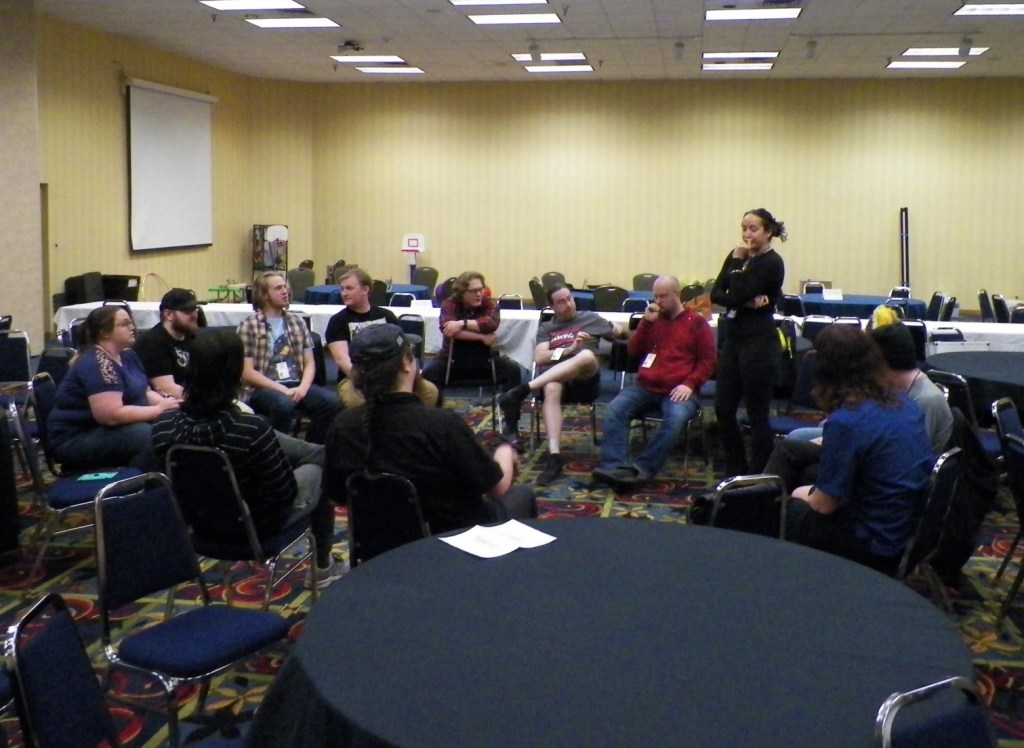
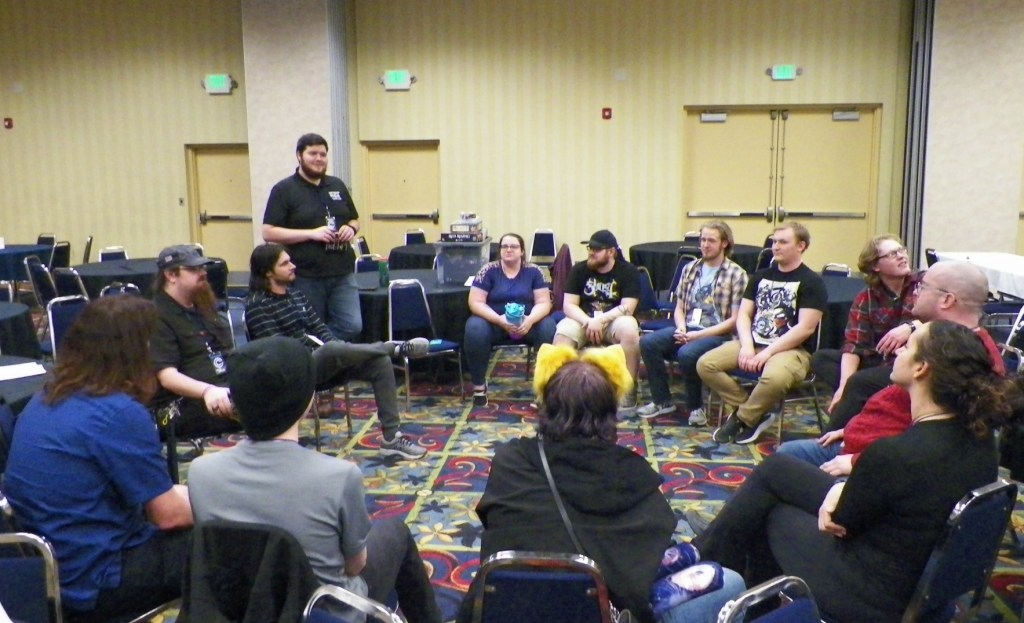
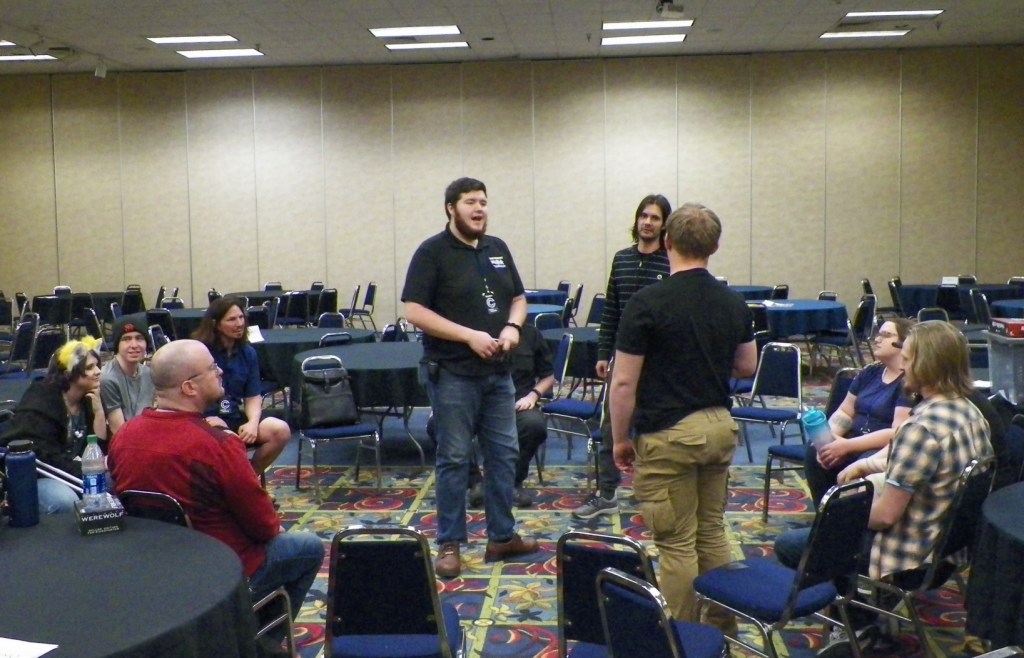
Two games of Werewolf were run. The first game had more people and with fewer special roles. I was also the first one offed that game! Oh well, I guess that will teach me to shut up and stop goofing around during the night phase. At least it was a chance to take pictures. The second game had fewer people but with more special roles. If I remember correctly, the killers won both games. It was around 2:20 in the morning of Saturday the 23rd when I dropped into bed for some sleep. Who knew time could fly? Tomorrow would be another day. Let’s see what it held…..

